 JSN
JSNIn October 2024 I joined a Visa workgroup to explore AI payments labeled “agentic commerce”. We distilled early discussions into a simple question:
What does it look like when AI agents begin browsing, buying, banking, and making financial decisions on behalf of users?
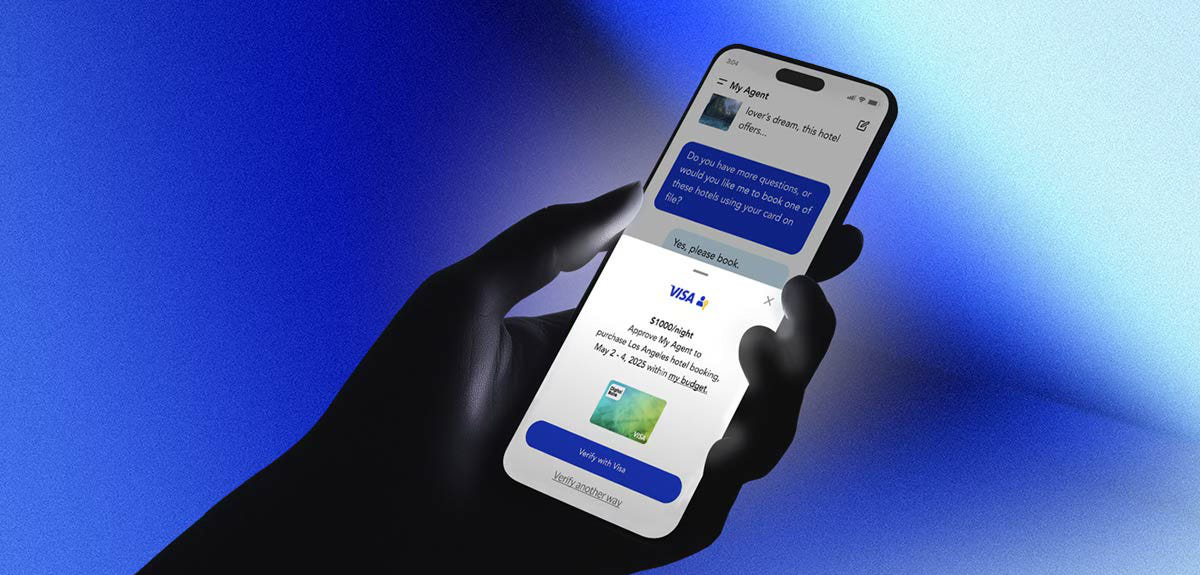
The scenario: a user prompts their agent with intent to plan, discover and make purchases. The agent organically surfaces products and services via live search without need for merchant participation in a marketplace. (How? Spoiler alert)
We kept our initial focus on consumers.
Recognizing the rapid growth of AI-enabled commerce, executive management funded our workgroup to become a Product team.
We quickly accelerated prototype production across a range of use cases, including complex, multi-step variations — e.g., updating a wardrobe, arranging a child's birthday event, food shopping for a family with customized recipes and repeat purchases, deal-hunting and taking advantage of loyalty rewards programs. The most ambitious prompts led to purchases across multiple merchants in a single, unified order flow — an alternative to shopping on a marketplace, like Amazon.
Underlying this process was a continuous refinement of the UX and UI yielding higher fidelity and supporting more branch flows, including user-prompted, agent-initiated transactions. Add in some excitement — because shopping is supposed to be fun.
User Research
Both primary and secondary personas (developers and consumers, respectively) were important for product-market fit. To validate the design concepts, I teamed up with the user research group handing off prototypes to support consumer testing in dScout.
In parallel, I gathered feedback from agent developers through the sales demo process. By creating demos for the Account team to present to prospective clients, I helped support business development while opening a direct channel for candid developer input. That feedback informed design iterations, and the demos themselves helped secure several high-profile LOIs ahead of launch.
A third prong of user research involved syncing with the Global Brand team to test users' willingness to adopt AI for shopping and purchasing. This included traditional focus groups, automated user testing and Neuro-testing.
Developer Focus: CLI → API, MCP
To engage our primary users — agent developers — I designed a command line interface, super-powered with an LLM for natural language commands to interact with our API and MCP server. To inform the CLI design I went down the rabbit hole to trace the origins of computing from CLI to GUI to AI. Then, I agent-engineered a working CLI and continuously iterated with user feedback. My personal research dovetailed with work.

Visa Intelligent Commerce™
Our small upstart team worked together rapid-fire to define a new, category-defining product introduced to market from inside a global enterprise in just weeks. The Product Marketing team rushed to secure a compelling product name: Visa Intelligent Commerce™.

Product Drop
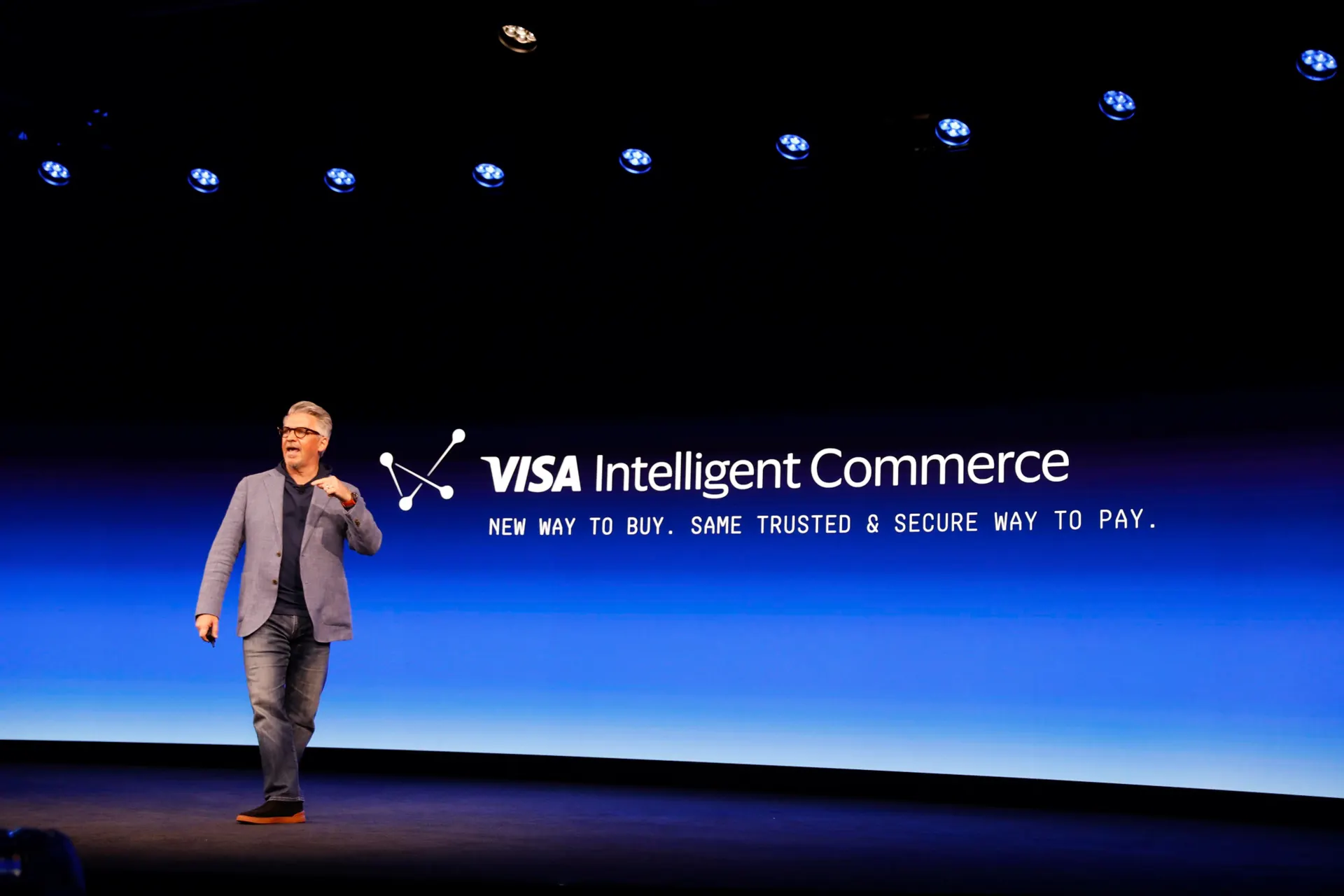
VIC debuted April 30, 2025 at Visa's first-ever Product Drop in San Francisco.
Trusted Agent Protocol™
Following launch of VIC, the nascent, agentic commerce ecosystem suffered from weak ties between agents and merchants. The most crucial element in commerce was still missing: trust. Specifically, Merchants needed to securely distinguish legitimate AI shopping agents from malicious bots, and improve agent engine optimization (AEO) for visibility. Trusted Agent Protocol was launched as an open-standard framework to help grow the new transaction paradigm.
Momentum
Beginning with our small workgroup, our Just-In-Time product design team in collaboration with Product, Engineering, Research, Marketing and Legal helped position Visa Intelligent Commerce as the central nervous system for the agentic commerce economy. While being an early innovator does not guarantee success, momentum continues...
Credits
Thanks to my design peers, and for the executives who supported our early workgroup all the way to launch day at Product Drop: Rubail Birwadker, Jack Forestell, Oliver Jenkyn, Wayne Best, Rajat Taneja, Ryan McInerny.